Island Policy as a Geopolitical Instrument — The Need for a New Holistic National Strategy
Abstract
The geopolitical significance of the Aegean’s small islands and islets is not exhausted by questions of sovereignty or potential maritime entitlements. It also depends upon their functional integration into broader insular systems, the continuity of human and economic presence, and the capacity of the state to administer, connect, and protect them. This essay advances the concept of the ‘functional island complex’: a group of inhabited islands, smaller islets, and intervening maritime spaces historically connected through habitation, production, movement, resupply, and administration. It does not constitute an autonomous rule of the Law of the Sea presently in force; it may, however, serve as a Greek analytical and political proposition, a basis for state practice, and an instrument of international legal argument. It does not automatically transform every rock into an island entitled to full effect; it does, however, permit the artificial isolation of each islet from the system to which it belongs to be challenged in practice. An integrated programme is proposed, combining demography, production, the environment, infrastructure, and cultural heritage, with national security as the ultimate criterion whenever, after all alternatives have been examined, the relevant objectives remain incompatible within nationally critical space.
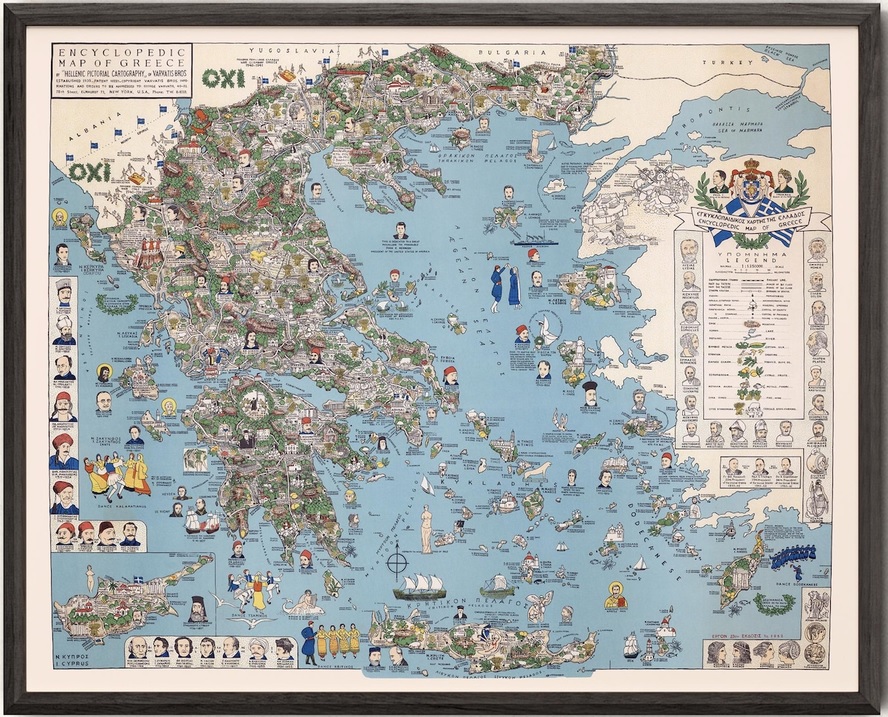 A living image of the Aegean Archipelago
Introduction — Abandonment Is Not a Neutral Phenomenon
Small islands and islets usually enter public view either as protected habitats or only when a Greek–Turkish crisis erupts and the theory of ‘grey zones’ returns to the foreground. What is absent is the essential picture: these formations are parts of a living human, economic, administrative, and strategic space that defines Greece as a maritime state.
Small islands must therefore be treated as constituent parts of a living Greek national space, not as isolated and disconnected points.
The Aegean is not a maritime zone separating two opposite and equivalent coastlines, Greek and Turkish, with the Greek islands interposed as isolated points between them. Greece is organically constituted by both its mainland and its insular territory, the latter forming its Aegean component. The Aegean is therefore an exceptionally dense Greek insular space, within which inhabited islands, smaller islets, rocks, and sea routes form groups bound by close geographical, historical, administrative, and economic relations. Greece and Turkey are not two coastlines competing for an intervening ownerless space; they are two distinct states whose territories are separated by established boundaries grounded in specific international treaties and rules of international law. This insular space possesses its own historical continuity, productive function, and social cohesion. It is not an appendage of the mainland. Archipelagic and mainland Greece exist in a relationship of mutual reinforcement: the hinterland provides administrative, economic, defence, and transport networks, while the islands broaden the Greek economy, enlarge the country’s maritime presence, and connect Greece with the Eastern Mediterranean.
Historical experience confirms this functional unity. The First Athenian League was organised as a maritime network of island and coastal cities, with Delos as its original centre.
UNCLOS defines an archipelago as a group of islands, interconnecting waters, and other natural features so closely interrelated as to form an intrinsic geographical, economic, and political entity, or which have historically been regarded as such. This definition does not make Greece an ‘archipelagic State’ in the Convention’s specific legal sense; it does, however, capture the functional reality of a substantial part of the Aegean (United Nations, 1982, Article 46). Under the present UNCLOS definition, Greece is a mixed state, comprising both a continental and an archipelagic component. Arki, Lipsi, Marathi, and dozens of smaller formations constitute a dense system of islets. The literature records 37 islets in the Arki and Lipsi groups, with human presence on Lipsi, Arki, and Marathi (Panitsa and Tzanoudakis, 2001).
Comparable, though distinct in their characteristics, are the cases of Kalymnos–Kalolimnos–Imia, Levitha–Kinaros, Oinousses, Psara–Antipsara, Agios Efstratios, and the Northern Sporades. The National Marine Park of Alonissos and the Northern Sporades encompasses six smaller islands and twenty-two rocky islets, with differing capacities for human use and living traces of pastoral, monastic, fishing, and maritime history (NECCA, n.d.).
These cases are not identical: some sustain permanent communities, others historical or seasonal use, still others strict environmental protection, while certain formations are of primarily strategic significance. Their diversity requires classification. It is equally erroneous to portray every rock as a habitable island or every uninhabited islet as a useless formation.
Livestock husbandry, coastal fishing, and small-scale productive activities have been constituent elements of many island economies. The European Union recognises the increased transport costs borne by the smaller Aegean islands and supports both their supply and local agricultural production (European Parliament and Council, 2013).
The functional relationship between inhabited islands and smaller islets is disrupted by maritime isolation, deficient services, high production costs, and restrictions imposed without geopolitical assessment. The result is a vicious circle of demographic weakening and geopolitical devaluation.
This pressure is not evenly distributed; it is more acute on the smaller and less touristic islands. A study of insularity drawing upon official statistical data records adverse demographic and ageing indicators—particularly the relationship between births and deaths—across a series of small islands in the Northern and Eastern Aegean, including Oinousses, Psara, Agios Efstratios, and Lipsi. Demographic resilience is therefore not an abstract development objective, but a prerequisite for preserving the functional cohesion of the insular space (Hellenic Agency for Local Development and Local Government, 2023).
Abandonment, a recurrent phenomenon, neither transfers sovereignty nor extinguishes maritime rights. In an environment of systematic Turkish contestation, however, it reduces effective presence, interrupts established uses, and facilitates the portrayal of the area as empty and contestable. Failure to arrest this process constitutes a grave political responsibility.
Greece requires a single, integrated policy linking demography, production, maritime transport, the environment, cultural heritage, infrastructure, and national security, with particular emphasis upon serving the latter.
1. The Aegean Archipelago as a Functional Island System
Historically, survival within small island groups was not confined to the principal island. The inhabited island provided housing, a school, a church, a harbour, and a market, while the neighbouring islets supplied grazing land, fishing grounds, anchorages, and spaces for seasonal activity.
To capture this reality, the term ‘functional island complex’ is proposed. It is a new analytical and political concept, not an already recognised legal category. It denotes a group of neighbouring islands and islets historically connected through habitation, production, fishing, movement, resupply, administration, and shared use of the sea. It does not require every formation independently to sustain a complete society, but rather to function as part of a coherent human, economic, and strategic space.
Just as an urban park forms an organic part of a city without being inhabited, the functional value of an islet does not depend upon autonomous settlement. An uninhabited islet may constitute an organic part of a neighbouring community as grazing land, a fishing location, an anchorage, a place of seasonal residence, a refuge, or an ecological reserve. Its value also derives from its position within the wider network of life and activity.
Just as non-contiguous parcels of land may form a single productive unit within an agricultural or pastoral holding, so in the Aegean territorial discontinuity across the sea does not entail functional discontinuity. The sea has simultaneously been a boundary and an avenue of communication.
To isolate each formation from its historical and productive environment is to distort reality. Greece has an interest in advancing the concept of the functional complex and supporting it through state practice. In the case of Arki, examining each uninhabited islet in isolation obscures its relationship with the inhabited island, the maritime routes, and the traditional uses that make it a productive or functional adjunct of an existing community. Comparable relationships link Lipsi, Kalymnos with Kalolimnos, Oinousses with its surrounding islets, and Psara with Antipsara. On Levitha and Kinaros, the significance of presence is measured by its duration, buildings, productive activities, and services provided to passing vessels, not merely by population numbers. Kalolimnos and Imia represent a different model. Imia is not a self-sufficient economic unit; its importance lies in Greek sovereignty, the territorial sea, its geographical position, and its integration into the historical and administrative environment of Kalymnos and the Dodecanese. Its proximity to Kalolimnos and its position on the Greek side of the 1932 delimitation reinforce that connection.
The concept of the functional complex does not abolish the separate legal examination of each formation; nor does it require Greece to adopt the narrowest possible interpretation of UNCLOS. Historical use, productive integration, administrative continuity, and connection with an existing community must be systematically documented and projected. The final legal determination may remain open; Greek strategy must not. Economic life does not presuppose absolute self-sufficiency. Even powerful states depend upon imports of energy, food, raw materials, medicines, and technology without the reality of their economic and social life being called into question. The same applies to small island communities. The importation of water, fuel, or food does not prove an incapacity to sustain habitation or economic life; the critical question is whether the activity is genuine, durable, and organically connected to the place.
The economy of the Aegean has always been networked. This is attested by the prehistoric circulation of Melian obsidian and by the wrecks of merchant vessels carrying wine, oil, and other products between island and coastal centres. Contemporary planning must recognise this character.
2a. Why the Aegean Does Not Possess the Legal Status of an Archipelago
The Aegean is an archipelago in the geographical, historical, and cultural sense of the word. It does not, however, constitute a unified body of ‘archipelagic waters’ in the specific legal sense of Part IV of UNCLOS. Under Articles 46–47 of UNCLOS, an archipelagic State is constituted wholly by one or more archipelagos and may, subject to conditions, draw archipelagic baselines. The waters enclosed within those lines acquire a special status (United Nations, 1982, Articles 46–53).
Greece does not meet this definition because of its extensive continental territory. As a mixed state, it possesses no general right to enclose its outlying archipelagos by means of the baselines provided for in Part IV. The subsequent practice of certain non-archipelagic states possessing outlying archipelagos demonstrates that the issue has not ceased to be the subject of state claims (see footnote 1). Greece has every interest in aligning itself with such states and pursuing archipelagic status for the Aegean. States including Denmark, Norway, Ecuador, Spain, and France have drawn straight baselines around certain outlying archipelagos. Nevertheless, no general customary rule has yet emerged permitting mixed states to subject their outlying archipelagos to the special regime of Part IV of UNCLOS; recent academic reconsideration likewise concludes that the law as it stands offers no adequate basis for such inclusion (Redgwell and Tzanakopoulos, 2023). The formation of international legal rules is, however, fluid: the evolution of international law frequently begins with unilateral and initially contested state initiatives, which acquire normative significance only if they are repeated, politically sustained, and more broadly accepted.
This conclusion defines the limits of present law, not of state practice or of the law’s future development. The persistent failure of Greek governments to coordinate with other mixed states in pursuit of a common interest is, at the very least, incomprehensible.
2b. UNCLOS and the Greek Choice after Its Adoption
To assess the prospects of a long-term Greek claim concerning outlying archipelagos, it is first necessary to examine how mixed states came to be excluded from the special archipelagic regime. This arrangement is neither natural nor inevitable. It is the product of the political and legal compromise forged during the Third United Nations Conference on the Law of the Sea, from 1973 to 1982. Wholly archipelagic states secured recognition of their geographical unity. States possessing both a mainland territory and outlying archipelagos, however, achieved no equivalent general rule.
In 1974 Greece submitted draft A/CONF.62/C.2/L.50, maintaining that islands are entitled to the same maritime zones as other land territory and that delimitation is governed by the general principles of law (United Nations, 1974a).
The Turkish proposal A/CONF.62/C.2/L.55 sought differentiated treatment of islands according to size, location, population, and other factors. The records reveal a conflict of geographical interests, not an issue susceptible to resolution by a simple Greek declaration (United Nations, 1974b; United Nations, 1974c). It is therefore inaccurate to suggest that a Greek government could simply have proclaimed the Aegean an archipelago. After UNCLOS, such a unilateral act would not have rested upon Part IV, while Greece chose to enter the Convention’s normative framework.
The substantive political question is different. It must be investigated whether Greek diplomacy understood in time the long-term significance of excluding mixed states from the archipelagic regime; whether it pursued, with sufficient consistency, a special arrangement for outlying archipelagos; and whether it attempted to build coalitions with states confronting an analogous problem. A full inquiry lies beyond the scope of the present essay. It would in any event require archival research, and it would be unserious to attribute the failure casually to a single person or political party; responsibility for the final international outcome is plainly complex. The enduring political responsibility for what followed is clearer. Once it had become evident that Greece could not employ the Convention’s special archipelagic regime, it should have developed a coherent alternative strategy: strengthening the smaller inhabited islands, recording the historical uses of islets, preserving maritime and productive connections, and treating the Aegean space as a single functional system in domestic planning. Instead, policies concerning demography, shipping, spatial planning, livestock husbandry, the environment, and defence remained fragmented. Precisely because international law does not treat the Aegean as a single Greek archipelagic space, Greece itself must treat it as a unified functional and strategic system.
3. Sovereignty, Maritime Zones, and Effect in Delimitation
The discussion conflates three distinct questions: sovereignty, entitlement to maritime zones, and the effect accorded in delimitation.
Sovereignty does not legally depend upon habitation or economic activity; it rests upon international title, treaties, administrative attribution, and the exercise of state authority (see footnote 2). Turkey’s theory of ‘grey zones’ does not merely concern the extent of maritime zones; it challenges the very title of Greek sovereignty over certain islets, on the claim that they were not expressly and individually ceded to Greece under the relevant international treaties. That challenge is legally distinct from Article 121(3) of UNCLOS, which concerns a formation’s entitlement to an exclusive economic zone and continental shelf, not sovereignty over the formation itself. The second concept concerns maritime zones. Under Article 121, an island is a naturally formed area of land, surrounded by water, which is above water at high tide. As a general rule, islands generate a territorial sea, a contiguous zone, an exclusive economic zone, and a continental shelf in the same manner as other land territory. Rocks that cannot sustain human habitation or economic life of their own are excepted; they possess neither an exclusive economic zone nor a continental shelf (United Nations, 1982, Article 121). Even such rocks, however, may possess a territorial sea; paragraph 3 extinguishes neither sovereignty nor territorial waters.
The more difficult concept is the capacity to sustain ‘human habitation or economic life of their own’. An extensive interpretation of the provision was set out in 2016 by the arbitral tribunal in the South China Sea Arbitration. The award concerns that particular dispute and does not constitute a binding rule for Greece. It nevertheless reflects a restrictive interpretative tendency, under which the inquiry focuses upon the natural capacity of the formation itself to sustain a stable human community or an economic life not wholly dependent upon external supply (Permanent Court of Arbitration, 2016, especially paras. 542–553). Greece must be aware of this jurisprudence, not convert it into a doctrine of self-restraint. It does not exhaust the possible interpretations of Article 121, nor does it negate the significance of historical habitation, seasonal use, and functional integration.
The phrase ‘human habitation or economic life of their own’ cannot reasonably be equated with complete self-sufficiency. The importation of supplies is normal; what matters is the duration of the activity and its organic connection with the place.
The transport of livestock or the construction of a merely token installation does not, by itself, establish a strong legal case. A long-standing and genuine use, integrated into the economic life of a neighbouring community and adapted to the formation’s natural capacities, is different. Greece has an interest in preserving and documenting such uses, not only for legal reasons, but also for administrative continuity, geopolitical presence, and future negotiating power.
Levitha is a characteristic case. Parliamentary scrutiny documents record long-standing family residence as well as livestock and agricultural activity, while also noting that the island appeared as uninhabited in the 2011 census. This contradiction demonstrates that effective presence may be weakened not only by the physical departure of inhabitants, but also by the state’s own failure to recognise habitation and integrate the islet coherently into administrative planning (Hellenic Parliament, 2015).
The case of Levitha exposes the administrative incoherence that so often suffocates small islands. Electricity-generation licences had been granted without objection from any public authority, while the administration began to investigate whether the island was inhabited only when, approximately two years later, an application was made to amend the relevant licences. At the same time, the Hellenic Statistical Authority acknowledged that Levitha’s sole permanent resident had been omitted from the 2011 census. This picture reveals not merely bureaucratic delay, but the absence of a common state conception of a nationally critical space: different authorities act piecemeal, without unified knowledge of the actual situation and without considering the demographic and geopolitical significance of their decisions (Ministry of Environment, Energy and Climate Change, 2014).
The antithesis to this state inertia is furnished by the late Despina Achladioti, the Lady of Ro, who chose to live for decades on the small islet west of Kastellorizo and to raise the Greek flag every day. Her presence gave Greek sovereignty a human dimension and made visible, in the simplest and most powerful manner, that even the smallest frontier space is a living part of Greek territory. The same absence of a unified state conception is evident when individual planning or environmental rules are applied in isolation from the overall functioning of the insular space. The effort to preserve human and productive presence is undermined when such rules are applied mechanically, without distinguishing between large-scale exploitation and low-intensity historical activity. When a water tank, a small dwelling, seasonal pastoral use, or basic resupply infrastructure is prohibited without an overall geopolitical assessment, the state may end by indirectly extinguishing the very human and economic presence it has a strategic interest in preserving.
Article 121, entitlement to an exclusive economic zone and continental shelf, and the effect accorded in delimitation are separate questions. The distinction must not become a pretext for renunciation before negotiation or before the contest of legal arguments has even begun.
Even an island entitled to an exclusive economic zone and continental shelf may not receive full effect in a particular delimitation. In Romania v. Ukraine, the International Court of Justice limited the role of Serpents’ Island beyond its territorial sea without calling Ukrainian sovereignty into question (International Court of Justice, 2009, paras. 185–188).
Greece must therefore formulate its case with precision. Genuine and enduring human presence, particularly when accompanied by economic activity organically connected with the place, is a critical element in distinguishing an island entitled to an exclusive economic zone and continental shelf from a rock within the meaning of Article 121(3) of UNCLOS. Habitation does not create sovereignty, nor does it automatically secure full effect in the delimitation of an exclusive economic zone; it does, however, strengthen the factual foundation of the Greek position, preserve administrative continuity, and avert the substantive desertification of the space.
These factors, together with coalitions of states sharing comparable interests, constitute Greece’s strongest arguments before international courts and tribunals.
4. Different Categories of Small Islands
National policy must distinguish four categories.
— Small permanently inhabited islands, such as Arki, Lipsi, Oinousses, Psara, and Agios Efstratios, among others, which should be primary objects of demographic and development policy.
— Islets with historical, seasonal, or limited presence, such as Levitha, Kinaros, and Kyra Panagia, among others, where essential infrastructure and the continuity of lawful uses are required without uncontrolled construction.
— Islets of major ecological sensitivity, such as Piperi and others, where economic activity may deliberately be restricted to a severe degree, while administrative, scientific, and surveillance presence should be intensified.
— Bare or inaccessible strategic formations, such as Kalogeros and Imia, among others, whose value lies in sovereignty, geographical position, their territorial sea, and their incorporation into systems of surveillance and defence.
This classification enables the state to avoid both the devaluation of every uninhabited islet as a useless rock and the establishment of token economic activity where natural conditions do not permit it. In every case, the installation and monitoring of scientific equipment, the systematic inclusion of such formations in research programmes, and the operation of lighthouses or other aids to navigation constitute genuine and useful activities that neither presuppose permanent human presence nor can properly be dismissed as contrived.
Greece does not require myths, but exact knowledge of its geography and a differentiated policy for each category of space.
5. The Environment and National Security
Environmental protection is a constitutional obligation under Article 24.
On small islands, even limited interventions may cause disproportionate harm to flora, seabirds, and protected species. Environmental protection does not, however, require the complete absence of human beings. Natura 2000 is not a regime of absolute prohibition: Directive 92/43/EEC permits, under strict conditions, projects justified by imperative reasons of overriding public interest where no alternative solution exists; compensatory measures are required in such cases (Council of the European Communities, 1992a, Article 6). The procedure must not become a mechanism for neutralising Greek presence or severing islets from their communities. Overgrazing or a major tourist development has one order of impact; supervised seasonal grazing, a water tank, a communications installation, or a small harbour work has another. The appropriate policy is controlled human presence where possible, stringent protection where necessary, and the uninterrupted exercise of Greek administration. A stable, discreet, and effective presence of the Hellenic Coast Guard is likewise required for surveillance, law enforcement, and measured deterrence.
Before any activity is restricted, alternative locations, scale, seasonality, techniques for reducing harm, and compensatory measures must be examined. If, despite such adaptations, security, deterrence, administrative continuity, and Greek presence in a critical area are impaired, national security must prevail. Such a policy does not licence unrestrained private exploitation; it addresses only genuine needs: habitation, access, water supply, energy, communications, civil protection, surveillance, and historical uses.
Environmental protection is itself a form of state authority. Monitoring, guarding, fisheries regulation, habitat restoration, and control of visitation demonstrate that the space is administered.
6. A National Programme for Island Resilience
Human presence requires income, water, energy, communications, transport, healthcare, and education; patriotic exhortation is not enough.
The inhabitant is not an unpaid border guard. A stable community, however small, generates activity: maritime connections, telecommunications, administrative presence, and continuous use of space. Conversely, an abandoned island is easily transformed into an abstract point on a map. A National Programme for Island Resilience, supported by stable multiannual funding, is therefore required.
Law 4770/2021 introduced the ‘Integrated Maritime Policy for the Island Space’ and provided associated financial instruments. This legislative initiative recognised the need for a policy specifically addressing insularity, but it did not overcome the fragmented operation of the administration or arrest the demographic and functional weakening of the smaller islands. The problem is no longer merely the absence of an institutional framework, but the distance separating legislative declarations from actual state practice. The existing, predominantly developmental framework must therefore be transformed into a binding national strategy integrating demographic presence, administrative continuity, and national security (Hellenic Republic, 2021).
NATO’s new approach to defence expenditure provides a broader framework that can be utilised. At the Hague Summit on 25 June 2025, the Allies committed themselves to directing 5 per cent of GDP to defence and security-related investment by 2035. At least 3.5 per cent is to cover core military requirements, while up to 1.5 per cent may be directed to critical infrastructure, civil preparedness, resilience, network protection, and related investments (NATO, 2025).
Not every school or clinic can be presented as military expenditure. Port facilities, communications, energy systems, civil protection, and supply depots may, however, qualify as dual-use projects. Funding can and should be multisectoral and transparent. Purely military installations and operational surveillance should be financed from the defence budget. The same applies to lighthouses, which fall under the Hellenic Navy. Dual-use infrastructure may be co-financed through defence, regional, and development resources. Water supply, healthcare, and education should be financed from the corresponding social budgets; habitat management from environmental resources; and the maintenance of monasteries and traditional buildings from ecclesiastical and cultural resources.
Correctly identifying the nature of expenditure—and thereby allocating it to the proper source—requires administrative modernisation. Modernising administration at the island level thus becomes a national priority.
7. Specific Policy Commitments
The National Programme for Island Resilience requires institutions, funding, and measurable obligations organised around four axes.
Axis 1. Mapping and Integrated Planning
The first prerequisite is a National Register of Small Islands and Islets, clarifying administrative attribution, ownership status, historical uses, traces of habitation, productive activities, infrastructure, environmental regimes, and evidence of state presence. The Map should combine cadastral, planning, archaeological, environmental, historical, and, where required, military data; one part should be public and another classified. On this basis, Special Plans for Functional Island Complexes should be established, treating islands, islets, maritime links, production, the environment, and security as a single system.
The concept of the functional complex is not presently a category recognised by UNCLOS. That does not mean it should remain exclusively a domestic administrative term. Greece can recognise it in administrative and spatial-planning law, organise its state presence around it, and gradually employ it as an element of international argument and state practice. Rules of international law are formed not only through theoretical interpretation, but also through persistent practice, political claim-making, and acceptance by other states.
A central requirement is a Special Geopolitical Assessment before prohibitions on use, environmental zoning, discontinuation of transport services, school closures, or the withdrawal of services from a locality. Fragmented treatment of island problems cannot be justified by invoking the dispersal of administrative competences. Greece has a Ministry of Maritime Affairs and Insular Policy, which, by virtue of its institutional mission, is required to coordinate the component policies governing the island space. The fact that shipping, demography, water supply, spatial planning, the environment, and basic services continue to be addressed piecemeal does not demonstrate an absence of competence; it demonstrates a failure to exercise that competence effectively.
This failure reflects an administrative structure still organised around the physical file, territorial competence, and formal compliance, while other critical sectors of Greek administration have moved to integrated digital registries and services. A ministry bearing ‘Insular Policy’ in its title cannot confine itself to managing vessels, ports, and port authorities; it must operate as the strategic centre for the cohesion, viability, and geopolitical resilience of the insular space.
Sectoral opinions must be synthesised, through an interministerial mechanism coordinated by the Ministry of Maritime Affairs and Insular Policy, into an overall strategic assessment.
Axis 2. Human Presence, Traditional Uses, and Public Services
Traditional use must receive legal recognition. Seasonal grazing, beekeeping, fishing, the collection of products, and temporary residence cannot be equated with new large-scale commercial investment. Such recognition does not entail the uncontrolled continuation of every old practice. The number of animals, the season, the duration of use, and the carrying capacity of each islet must be determined scientifically. Certain formations may require stringent restriction or complete prohibition. The administrative presumption must nevertheless be reversed: documented historical use cannot be treated from the outset as unlawful until the inhabitant proves otherwise.
Every permanently inhabited small island requires a guaranteed level of services: maritime transport, emergency medical evacuation, telemedicine, education, water supply, energy, telecommunications, and administrative access. These services may be organised on an inter-island basis, but they must be stable and real. Maritime transport should, in this context, be treated as a service of national cohesion and security. Non-commercial routes cannot be assessed solely by ticket numbers or short-term commercial return. The European Union framework permits Member States to conclude public-service contracts or impose public-service obligations for regular maritime services to, from, and between islands (Council of the European Communities, 1992b). These routes carry residents, food, livestock, materials, workers, and state services. They are a critical component of the national supply chain and of the everyday functioning of the island space.
Axis 3. Infrastructure, Local Logistics, and Funding
A National Island Resilience Fund should be established, with a multiannual budget and eligibility criteria for expenditure. The Fund would finance dual-use infrastructure, housing, telemedicine, desalination, energy autonomy, anchorages, networks, environmental monitoring, and small-scale production, always in response to a specific need and with measurable results. Paid island-logistics contracts may also be established with members of local communities for monitoring, reporting pollution or unlawful activity, maintaining installations, and supporting scientific missions. Such contracts would make use of local knowledge and proximity; they would not replace the competent authorities and would remain subject to them.
Axis 4. Administration, Oversight, and Public Accountability
The government should submit an annual report to Parliament on small islands and functional island complexes.
The report should cover population trends, the operation of schools and basic services, the condition of infrastructure, the frequency of maritime connections, environmental conditions, the continuity of traditional uses, and progress on strategic projects. It may contain both a public and a classified part, thereby combining democratic accountability with the protection of sensitive operational information. Every project must form part of a defined plan, possess outcome indicators, and be subject to financial and administrative scrutiny. National security cannot serve as a pretext for opacity or clientelist exemptions. These commitments would transform island presence from piecemeal management into permanent state policy.
8. Necessary Objections
The first objection concerns the high per-capita cost of public services. The observation is correct in accounting terms, but inadequate in political and national terms. These services do not benefit only the permanent residents; they sustain ports, transport links, telecommunications, infrastructure, and the capacity of the state to intervene across a wider maritime space. The problem can be addressed through small-scale solutions with high technological efficiency. The essential issue is to weigh the short-term cost of preserving a functioning national space against the far greater long-term cost of abandoning it. The particular conditions of insularity require that this additional cost be shared by the body of taxpayers as a whole, in the same way as the cost of national defence. The return on such investments cannot therefore be assessed solely in terms of immediate economic efficiency, but must also be judged by reference to national cohesion, administrative presence, and, most importantly, resilience and security.
The second objection concerns the risk of instrumentalising inhabitants. Settlement must be a matter of free choice under dignified conditions; the state should create favourable conditions for that choice, not demand coerced presence in the form of a ‘human flag’.
The third objection concerns environmental harm caused by livestock husbandry. On a small and arid formation, even a limited number of animals may cause overgrazing and soil erosion. The objection is entirely valid. Pastoral activity is not automatically beneficial merely because it is traditional. The carrying capacity of the islet, seasonal restrictions, possible exclusion zones, and the species to be raised must be scientifically determined. Grazing should be prohibited and replaced by another economic activity on some islets; on others it may be permitted under strict control.
The fourth objection is the suspicion that economic life is being artificially manufactured in order to establish maritime entitlements. A purely token installation would be legally weak and politically vulnerable. Preserving existing communities, historical uses, and genuine supply networks is not, however, contrived. Where natural conditions do not permit human habitation or ordinary economic activity, active state presence may instead be maintained through lighthouses, scientific and environmental programmes, monitoring systems, and regular administrative supervision.
The fifth objection is that strengthening Greek presence may provoke tension with Turkey. This objection reverses the logic of sovereignty. Greece cannot restrict the exercise of lawful rights within its own territory because a third state disputes them or threatens to react. Such self-restraint does not reduce tension; it converts Turkish pressure into an effective instrument for the de facto restriction of Greek sovereignty and encourages further claims.
The maintenance of residents, maritime and other connections, water supply, environmental monitoring, productive uses, administrative services, and security infrastructure constitutes the ordinary exercise of state authority on Greek territory. Where required, this presence must also be supported by credible deterrent capacity. Deterrence does not require spectacular or uncoordinated gestures, but steadiness, continuity, operational readiness, and a clear determination to protect the space.
Avoiding unnecessary escalation is legitimate; it must not, however, become a policy of appeasement or a pre-emptive surrender of rights. Calm secured through self-restraint is temporary and fragile. More enduring stability rests upon the unambiguous exercise of sovereignty and the conviction that any attempt to create faits accomplis will fail.
The sixth objection concerns the risk of clientelist management. A special fund combined with exceptions justified in the name of national security could be used for arbitrary construction, tourism interests, or opaque subsidies. The risk is real. Every project must be tied to a published plan, a specific performance indicator, and full financial scrutiny. The strategic value of an islet cannot serve as a pretext for converting it into ordinary commercial real estate. Without clear limits, the proposal may degenerate into costly symbolism, ecological damage, or clientelist administration. With clear limits, it can become a serious policy of national resilience.
Proposals to the Political Leadership
The next Greek government does not need to announce yet another general policy on insularity. It needs to undertake specific, binding, and measurable commitments.
First, it should formally recognise the Aegean island space as a single functional and strategic system and incorporate the concept of the functional island complex into administrative and spatial planning.
Second, it should establish a National Register of Small Islands and Islets recording administrative attribution, international titles, historical and current productive uses, infrastructure, environmental regimes, and every form of evidence demonstrating continuous state presence.
Third, it should prepare a specific plan for each functional island complex, integrating habitation, maritime transport, water supply, energy, production, environmental protection, surveillance, and defence.
Fourth, it should establish a mandatory geopolitical assessment before any decision capable of causing population decline, interruption of historical uses, withdrawal of services, or weakening of Greek presence on a small island or islet.
Fifth, it should guarantee every permanently inhabited small island a minimum level of maritime connectivity, healthcare coverage, education, water supply, energy sufficiency, telecommunications, and administrative services.
Sixth, it should establish a National Island Resilience Fund with multiannual financing, transparent criteria, measurable results, and the capacity to combine development, environmental, social, and defence resources.
Seventh, it should assign the Ministry of Maritime Affairs and Insular Policy genuine strategic authority and coordinating responsibility, accompanied by integrated digital registries, the abolition of administrative dependence upon the physical file, and annual accountability before Parliament.
Eighth, it should build alliances with other mixed archipelagic states and pursue, consistently and over the long term, the evolution of international law towards recognition of their functional and geographical unity.
Such a programme would not constitute an aggressive alteration of the status quo. It would constitute the normal, systematic, and deterrentially credible exercise of Greek sovereignty and administration. Avoiding appeasing forms of self-restraint, preserving genuine communities, protecting historical uses, and ensuring the continuous presence of the state are conditions of stability, not causes of tension.
The defence of the Aegean does not begin when a foreign warship appears. It begins with decisions concerning the inhabitant, the route, the school, the water tank, the lighthouse, the scientific mission, and the administrative act. Sovereignty is grounded in law; its geopolitical endurance is secured through presence, infrastructure, deterrent power, and, above all, political will.
Footnotes
-
The history of the Law of the Sea demonstrates that many rules now accepted began as unilateral and initially contested state claims which, once repeated, politically supported, and more broadly accepted, were eventually incorporated into international law. The territorial sea evolved from the old cannon-shot rule and the three-mile limit to the now generally accepted unilateral entitlement to twelve nautical miles. In 1941 President Roosevelt extended American naval surveillance in the Atlantic to approximately Iceland and the approaches to Ireland; this was not a claim to territorial waters, but a characteristic example of strategic initiative preceding full legal consolidation, undertaken to protect convoys before the United States entered the war. In 1945 the Truman Proclamation unilaterally placed marine and submarine natural resources under United States jurisdiction and control; the early conception of the continental shelf was associated with the depth of 100 fathoms, was codified in the 1958 Geneva Convention, and was later expanded through Article 76 of UNCLOS. In 1952 the Santiago Declaration by Chile, Peru, and Ecuador claimed exclusive exploitation out to 200 nautical miles, contributing to the evolution of the exclusive economic zone. Indonesia’s unilateral Djuanda Declaration of 1957 connected the country’s outermost islands by straight baselines and treated the waters between them as a single national space; the initially contested principle of the archipelagic State was ultimately recognised in Part IV of UNCLOS. Iceland likewise extended its exclusive fisheries zone in successive stages, provoking the confrontations with the United Kingdom known as the ‘Cod Wars’. The eventual establishment of a 200-nautical-mile zone formed part of the broader international movement that later led to recognition of the exclusive economic zone. Finally, Maltese Ambassador Arvid Pardo’s 1967 proposal led to recognition of the deep ocean floor beyond national jurisdiction as the ‘common heritage of mankind’. After protracted negotiations, these developments were brought together in the Montego Bay Convention of 1982. They do not demonstrate that every arbitrary unilateral claim produces law; they do demonstrate that international law often evolves through the interaction of state initiative, reaction, gradual acceptance, and eventual treaty codification.
-
In substantive terms, of course, sovereignty ultimately depends upon power. Under military occupation, for example, sovereignty is exercised by the occupier despite the violation of every rule of international law. International actors are sometimes disturbed by such circumstances, but in the case of Cyprus none has been disturbed sufficiently to reverse them. This also indicates the value of international law when stripped of the power required for its enforcement.
Bibliography
Council of the European Communities. 1992a. Council Directive 92/43/EEC of 21 May 1992 on the Conservation of Natural Habitats and of Wild Fauna and Flora. Official Journal L 206, 22 July 1992, pp. 7–50. https://eur-lex.europa.eu/legal-content/EN/ALL/?uri=CELEX:31992L0043
Council of the European Communities. 1992b. Council Regulation (EEC) No 3577/92 of 7 December 1992 Applying the Principle of Freedom to Provide Services to Maritime Transport within Member States (Maritime Cabotage). Official Journal L 364, 12 December 1992, pp. 7–10. https://eur-lex.europa.eu/legal-content/EN/TXT/?uri=CELEX:31992R3577
European Commission. 2019. Managing Natura 2000 Sites: The Provisions of Article 6 of the Habitats Directive 92/43/EEC. Official Journal C 33, 25 January 2019. https://eur-lex.europa.eu/legal-content/EN/TXT/?uri=OJ:JOC_2019_033_R_0001
European Commission. 2021. Assessment of Plans and Projects in Relation to Natura 2000 Sites — Methodological Guidance on Article 6(3) and (4) of the Habitats Directive 92/43/EEC. Official Journal C 437, 28 October 2021. https://eur-lex.europa.eu/legal-content/EN/TXT/?uri=OJ:C:2021:437:FULL
European Parliament and Council. 2013. Regulation (EU) No 229/2013 of 13 March 2013 Laying Down Specific Measures for Agriculture in Favour of the Smaller Aegean Islands. Official Journal L 78, 20 March 2013, pp. 41–50. https://eur-lex.europa.eu/eli/reg/2013/229/oj
International Court of Justice. 2009. Maritime Delimitation in the Black Sea (Romania v. Ukraine), Judgment of 3 February 2009. I.C.J. Reports 2009, p. 61. https://www.icj-cij.org/case/132/judgments NATO. 2025. The Hague Summit Declaration. Issued by the NATO Heads of State and Government, The Hague, 25 June 2025. https://www.nato.int/en/about-us/official-texts-and-resources/official-texts/2025/06/25/the-hague-summit-declaration
Panitsa, Maria, and Dimitrios Tzanoudakis. 2001. “A Floristic Investigation of the Islet Groups Arki and Lipsi, East Aegean Area, Greece.” Folia Geobotanica 36: 265–279. https://doi.org/10.1007/BF02803180
Permanent Court of Arbitration. 2016. The South China Sea Arbitration: The Republic of the Philippines v. The People’s Republic of China, Award of 12 July 2016. Reports of International Arbitral Awards, vol. XXXIII, pp. 153–617. https://legal.un.org/riaa/cases/vol_XXXIII/153-617.pdf
Redgwell, Catherine, and Antonios Tzanakopoulos. 2023. “The Interaction of Treaty and Custom in the Concept of Offshore Archipelagos.” International and Comparative Law Quarterly 72(3): 573–599. https://doi.org/10.1017/S0020589323000222
United Nations. 1974a. Greece: Draft Articles on the Regime of Islands and Other Related Matters, A/CONF.62/C.2/L.50. Third United Nations Conference on the Law of the Sea, Official Records, vol. III. https://legal.un.org/diplconf_records/1973_los/vol3.shtml
United Nations. 1974b. Turkey: Draft Articles on the Regime of Islands, A/CONF.62/C.2/L.55. Third United Nations Conference on the Law of the Sea, Official Records, vol. III. https://legal.un.org/diplconf_records/1973_los/vol3.shtml
United Nations. 1974c. Third United Nations Conference on the Law of the Sea, Second Committee, 39th Meeting, A/CONF.62/C.2/SR.39, 14 August 1974. https://legal.un.org/diplconf_records/1973_los/docs/english/vol_2/a_conf62_c2_sr39.pdf
United Nations. 1982. United Nations Convention on the Law of the Sea. Montego Bay, 10 December 1982. See especially Part IV, Articles 46–53, and Part VIII, Article 121. https://www.un.org/depts/los/convention_agreements/texts/unclos/unclos_e.pdf
Hellenic Parliament. 2015. ‘The Island of Levitha Is Classified as an Uninhabited Rocky Islet.’ Parliamentary scrutiny document concerning Question No. 2883/24.9.2014 and the replies of the competent ministries. 30 October 2015. https://www.hellenicparliament.gr/UserFiles/c0d5184d-7550-4265-8e0b-078e1bc7375a/9367134.pdf
Hellenic Republic. 2021. Law 4770/2021: Integrated Maritime Policy for the Island Space. Government Gazette A 15/29.1.2021. https://www.hellenicparliament.gr/Nomothetiko-Ergo/Anazitisi-Nomothetikou-Ergou?law_id=251eecea-ebb0-465a-a8e0-acb5015986e9
Hellenic Agency for Local Development and Local Government (EETAA). 2023. Insularity 2021–2027: Characteristics, Problems, and Policy Proposals. https://eetaa.gr/wp-content/uploads/2023/06/nisiotikotita-2021-2027.pdf
Natural Environment and Climate Change Agency (NECCA). n.d. Management Unit of Alonissos, Northern Sporades National Park and Protected Areas of Eastern Thessaly. https://necca.gov.gr/en/mdpp/management-unit-of-alonissos-northern-sporades-national-park-and-protected-areas-of-eastern-thessaly/
Ministry of Environment, Energy and Climate Change. 2014. ‘Reply to Question No. 2883/24.09.2014 submitted by MP Ch. Pappas.’ Ref. No. YAPE/F38/2120/16200, 17 October 2014. With attached document No. O-59779/09.10.2014 of the Regulatory Authority for Energy. https://www.hellenicparliament.gr/UserFiles/67715b2c-ec81-4f0c-ad6a-476a34d732bd/9055931.pdf