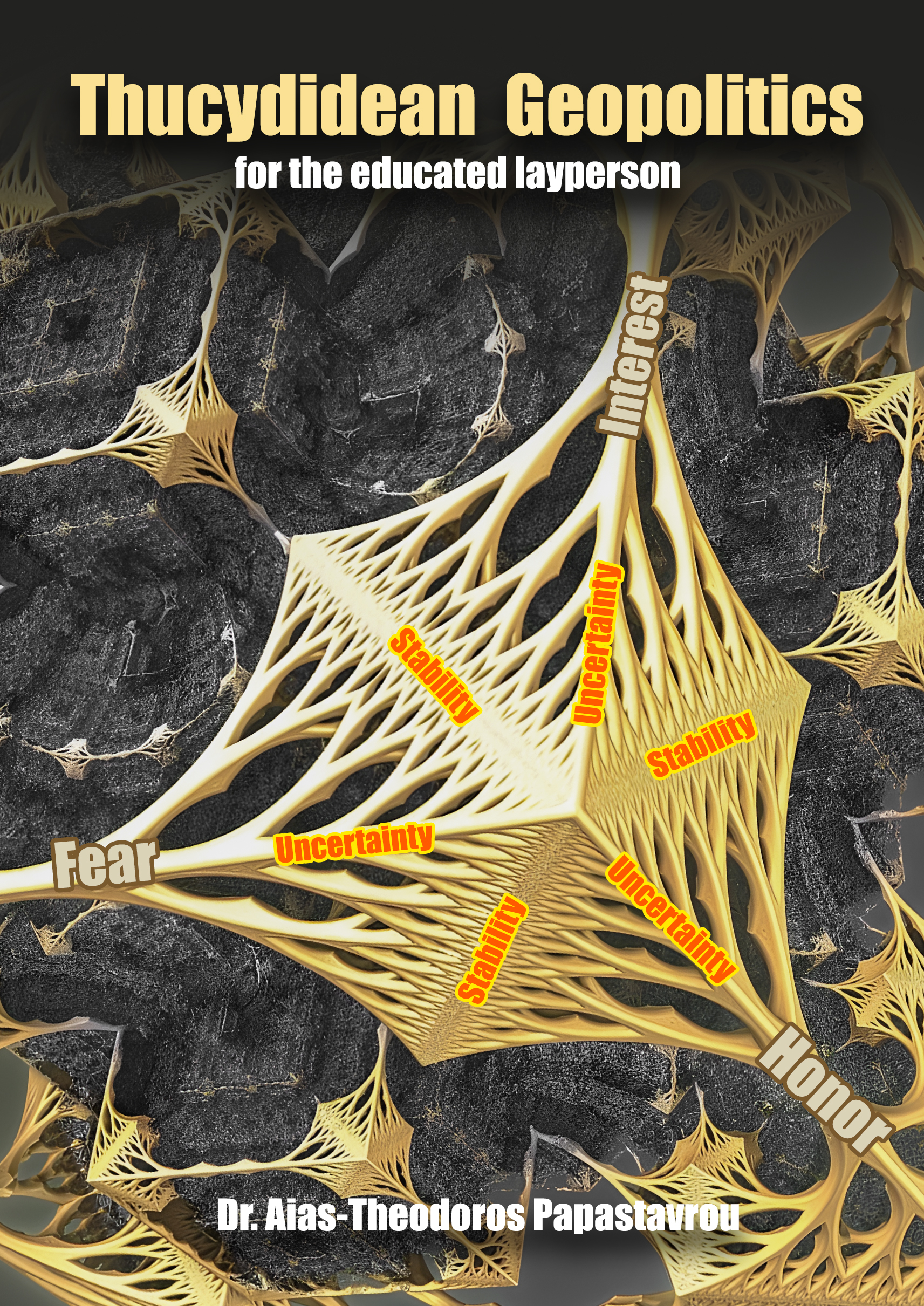
Thucydidean Geopolitics
Analysis of power, Fear, Honour, Interest, and Dominance in the modern world
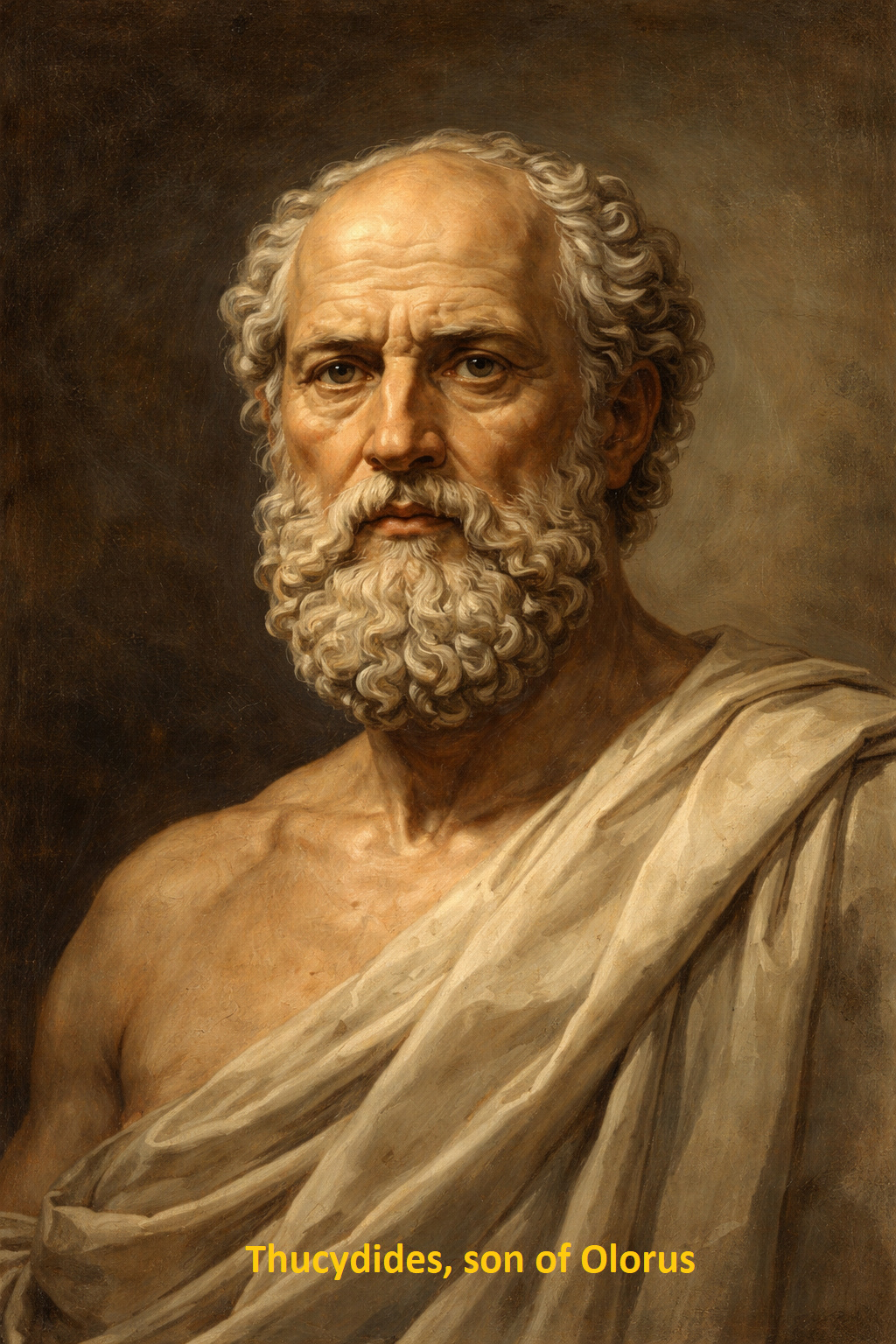
Thucydidean Geopolitics is dedicated to the study of modern geopolitics through a Thucydidean lens — applying Thucydides’ analysis of power, fear and honour to contemporary international relations and strategic rivalry.
It proceeds from a simple but demanding premise: that the fundamental drivers of political behaviour — Fear, Honour, Interest, and the desire for Dominance — have not changed, even when the material conditions and the vocabulary of power have.
I write for the educated layperson who is dissatisfied with journalistic commentary, sceptical of ideological simplifications, yet not interested in academic formalism for its own sake. The ambition here is neither policy prescription nor moral instruction, but analytical clarity. Geopolitics, when stripped of illusion, becomes intelligible—and therefore discussable—even outside specialist circles.
The point of departure is Thucydides, not as a historian of antiquity alone, but as a diagnostician of political behaviour. His analysis of the Peloponnesian War remains unmatched in its capacity to expose how states and political communities behave under conditions of insecurity, rivalry, and perceived decline. Power, in this view, is not merely material capacity. It is a relational phenomenon, shaped by perception, miscalculation, memory, fear of humiliation, and the pursuit of Dominance within a given system.
A Thucydidean approach does not deny ideology, values, or narratives. It places them in context. Appeals to justice, legality, or morality acquire political relevance only insofar as they intersect with power relations, strategic necessity, and the deeper imperatives of Honour and Interest. This is not cynicism. It is analytical restraint.
The modern world, despite its technological complexity, displays patterns that are structurally familiar. Alliance systems expand and contract. Rising powers test limits. Declining powers overreact or delay adjustment. Peripheral theatres acquire central importance through geography, energy routes, or symbolic value. Internal cohesion becomes a strategic variable. None of this requires prophetic insight. It requires attention to structure and to human behaviour under pressure—particularly when Fear escalates faster than material threat, or when the pursuit of Dominance outruns strategic capacity.
The essays presented here examine such patterns across regions and periods: the Near East, the Eastern Mediterranean, Eurasia, Africa, and the wider maritime world. Historical analogies are used cautiously—not as rhetorical devices, but as instruments of comparison. The intention is not to equate past and present, but to identify recurring logics beneath changing forms, especially the interaction between Honour, perceived Interest, and systemic pressure.
I write independently, outside institutional frameworks and without affiliation to policy centres or ideological camps. This is a deliberate position. Independence allows clarity, but it also imposes responsibility. Arguments must stand on internal coherence and on the capacity to illuminate reality, not on authority by association.
The book Thucydidean Geopolitics — for the educated layperson constitutes the most systematic exposition of this approach. This site serves as its intellectual extension: a space for further development, refinement, and application of the same analytical method. The essays published here are not reactions to the news cycle. They are attempts to think slowly about enduring problems, including the long-term consequences of unbalanced Dominance and misjudged Interest.
The tone of this site is intentionally restrained. There is no call to mobilisation, no demand for agreement, and no attempt to persuade through urgency. Geopolitics rewards patience and punishes haste. The same should apply to its study. Readers who approach these texts in good faith will find neither optimism nor despair, but a consistent effort to understand how political communities behave when confronted with necessity. That, in the end, was also the ambition of Thucydides: to offer a psession for all time—«κτῆμα ἐς ἀεί μᾶλλον ἤ ἀγώνισμα ἐς τὸ παραχρῆμα ἀκούειν» (History of the Peloponnesian War, 1.22.4)—not in the sense of comfort, but in the sense of durable insight.