From Firepower Balances to the Distribution of Power
This essay seeks to answer the following question:
How does the rapid expenditure of critical munitions affect the short‑term war‑fighting readiness of the United States and its allies, and under what conditions can this erosion of readiness alter the broader balance of power?
Abstract
This article examines whether the intensive expenditure of critical munitions in the war in Ukraine and in the Iranian theatre is measurably degrading the operational readiness of the United States and its allies vis‑à‑vis China and Russia, and under what conditions such degradation might affect the broader distribution of power. It focuses on a narrow set of categories with outsized strategic weight—high‑end air and missile defence interceptors, long‑range ballistic and cruise missiles, and precision‑guided munitions—where high unit cost and low peacetime production rates create structural bottlenecks. The argument advanced is that, in high‑intensity warfare, the decisive variables cease to be stockpiles in isolation and become instead the industrial capacity to replenish, the ability to shift inventories across theatres, and the degree of operational economy in the use of scarce systems. The Iranian theatre illustrates mounting pressure on interceptor stocks and the emergence of a shift, on Iran’s side, from purely military effect to economic and politico‑psychological disruption once protracted high‑intensity combat no longer favours the weaker belligerent. Finally, the paper suggests that China can exploit windows of opportunity less by numerical superiority in munitions than by recalibrating its risk calculus, shaping narratives of credibility, and extracting informational advantage—without this yet amounting to a definitive reordering of the overall balance of power.
I. Introduction: Question and Working Hypothesis
The protracted war in Ukraine, combined with US and Israeli strikes against Iran and the visible prospect of their continuation, has brought into the open a problem that was long discussed only within specialist circles: the depletion of critical munitions inventories. The issue is not the gross tonnage of ordnance, but the adequacy of specific sophisticated and costly categories that underpin the endurance of high‑intensity operations. Commentators now routinely point to significant consumption of high‑end interceptors such as THAAD and the Standard Missile‑3 and ‑6 families, at the very moment when the US defence industrial base is under pressure to sustain support for Ukraine and Israel while also preserving sufficient stocks for a potential crisis in the Indo‑Pacific—the theatre Washington declares to be its primary strategic priority.
The central question is therefore not whether “the West is running out of weapons” in a generic sense, but whether the accelerated expenditure of critical munitions in Ukraine and the Iranian theatre is measurably eroding relative readiness against China and Russia, and to what extent a change that initially manifests itself as a shift in firepower might translate into a change in the overall distribution of power. The working hypothesis is that depletion of particular categories of critical munitions and weapon systems can reduce, for a certain period, the ability to conduct simultaneous or immediately successive high‑intensity operations in more than one theatre.
The analysis does not rely on precise stockpile figures, which are largely classified and, in any case, methodologically fragile. Instead, it draws on publicly documented rates of consumption, declared production plans and investments in production lines, official and semi‑official reports, and a comparative assessment of the capacity to replenish under the pressure of active operations in multiple theatres.
II. Defining “Critical Munitions”
The inquiry is deliberately restricted to a small number of categories whose strategic impact is disproportionate to their quantities. These include long‑range cruise and ballistic missiles; high‑technology air and missile defence interceptors (Patriot, Aegis/Standard, THAAD, Arrow, David’s Sling); and long‑range precision‑guided munitions.
Two features justify this focus. First, these systems combine high unit cost with low peacetime production rates, which makes rapid replenishment inherently difficult. Second, they are decisive in the opening phases of a high‑intensity conflict. In that initial stage, victory may hinge on the ability to deliver synchronised salvos against critical targets while sustaining defensive interception without immediate collapse of interceptor inventories. That outcome is often decided long before “war footing” production lines have fully ramped up.
III. Consumption, Replenishment, and the Role of Industry
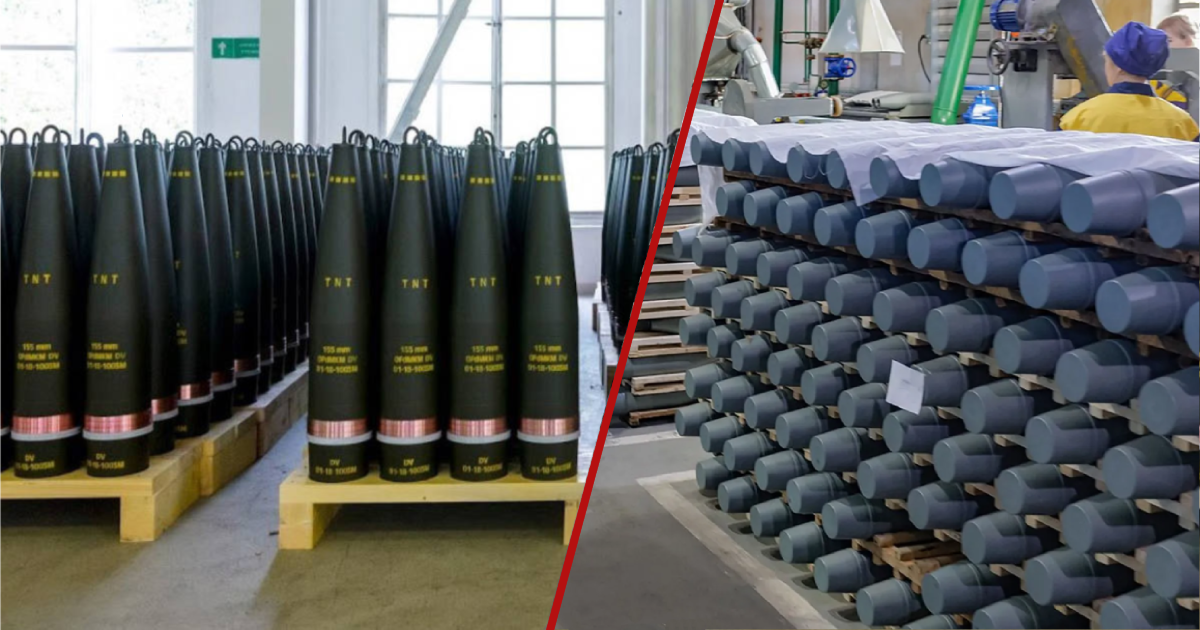
Once war reaches a certain intensity, firepower ceases to be a simple function of what lies in depots. It increasingly reflects three dynamic parameters: the rate at which industry can replenish expended munitions, the speed and flexibility with which stocks can be shifted between theatres, and the degree of economy in the employment of scarce systems. The point is not to divine exact stockpile levels, but to establish whether consumption rates are tending to exceed replenishment and thus forcing a re‑ordering of priorities if high intensity is to be sustained over time. The contrast between Russia and the West in artillery illustrates this logic in crude but telling form. Estimates suggest that Russia produced on the order of 2–2.3 million artillery shells in 2024, up markedly from earlier years, while the United States aimed to reach an annual output of roughly 1.2 million 155mm shells by the end of 2025, with European producers collectively targeting similar figures. These numbers are debated and politically charged, but the trend that matters for geopolitical analysis is clear: in a war of attrition, the actor that can convert its economy into wartime mass production more rapidly acquires a structural advantage.
In the realm of advanced guided munitions, the problem assumes a different shape. The United States is investing billions of dollars to increase production of Patriot, Standard, and other interceptors, yet official expectations commonly point to a two‑ to three‑year horizon before the desired output levels are reached. The lag between political decision and expanded industrial capacity creates an interim window of vulnerability: a period during which inventories remain low while demand is high and rising. As a conflict lengthens or intensifies, the key variable thus becomes not the initial size of the stockpile, but the sustainable wartime rate of replenishment.
IV. The Iranian Theatre and the Emergence of “Economy of Interception”
Against this backdrop, the Iranian theatre offers a concrete, if imperfect, laboratory. Reporting indicates that during the “Twelve‑Day War” against Iran a significant share of THAAD interceptors was expended, alongside substantial use of SM‑3 and SM‑6 interceptors from Aegis‑equipped ships and land‑based systems. Already by 2024, experts and specialised outlets had warned that deliveries of munitions to Ukraine and support for Israel’s air and missile defence were drawing down certain categories of US and allied stocks faster than existing production lines could replenish them.
In the renewed phase of conflict with Iran in 2025–26, public discussion has been amplified by statements from US officials expressing concern that a prolonged campaign could exhaust critical interceptor categories that might also be required in a contingency in the Indo‑Pacific. In periods of multiple, concurrent high‑intensity theatres, the rate at which missiles and interceptors are expended genuinely does approach or exceed current production rates, generating pressure on depots and politically fraught allocation decisions.
Under such conditions, the “quantity of interceptors” is no longer the only meaningful variable. The logic governing their employment in saturation scenarios becomes equally important. Reports that air defence commanders are obliged to prioritise military installations over populated areas do not merely illustrate a tactical choice; they reveal systems operating under real‑time replenishment constraints. This is the emergence of an economy of interception, in which every launch has both operational and political cost.
From Iran’s perspective, assessing endurance requires a distinction between the mere “ability to strike” and the “ability to strike with militarily decisive effect.” The former can be sustained for some time, especially when the systems employed are relatively cheap or easily replenished. The latter presupposes a steady expenditure of more demanding capabilities—particularly ballistic missiles and sophisticated guided weapons—where constraints on production, materials, and critical subsystems are far more acute.
When the capacity to sustain a “purely military” high‑intensity campaign is limited or perceived as such, it is rational for the weaker actor to shift towards objectives that yield disproportionate effect for a lower material outlay. Strikes or credible threats that raise uncertainty in energy markets, burden shipping, increase price volatility, or drive up insurance premia can function as instruments of strategic pressure even as the capacity to sustain high‑tempo military fires wanes. The adoption of this tactic suggests that Iran is husbanding its remaining high‑end stocks while seeking, with some success thus far, to impose costs primarily through economic disruption—an arena in which Western states may prove more vulnerable than on the purely military plane.
V. Russia and China: Two Different Logics of Endurance
Russia has reoriented a significant share of its economy towards war. High rates of consumption in Ukraine are matched by heightened munitions output, with estimates of artillery shell production reaching into the low millions annually and plans for further expansion. Beyond its immediate battlefield implications, this reallocation supports Russia’s GDP in the short to medium term. The composition of Russian munitions diverges markedly from Western practice: there is greater emphasis on large volumes of relatively unsophisticated shells and on ballistic and cruise missiles of limited accuracy, as opposed to the Western bias towards fewer, more precise, and more expensive guided munitions.
This is not merely a technical divergence; it reflects a different doctrine and a different conception of the cost of war. Ultimately, it reaches into the social sphere: what level of destruction, collateral damage, and duration of conflict is considered tolerable within each political community. The hypothesis that Russian society may exhibit higher tolerance for low‑discrimination operations, whereas similar methods tend to provoke sharper political and social friction in Western societies, is advanced here not as a moral judgement but as an analytical proposition. Its relevance lies in its potential impact on the duration of the war effort and on the stability of political will to continue or escalate it.
China, by contrast, appears to be planning primarily for a high‑intensity, time‑compressed conflict in the Western Pacific, centred on Taiwan. This inference rests on the prominence accorded to the People’s Liberation Army Rocket Force and on the characteristics of systems such as the DF‑21D and DF‑26—long‑range anti‑ship and theatre ballistic missiles designed for rapid delivery of extensive strikes against naval and fixed land targets. The precise size of Chinese missile inventories remains opaque, but the concentration of large numbers of launchers and associated infrastructure in a relatively confined geographic space reinforces the impression of a doctrine that seeks to achieve strategic fait accompli within a narrow temporal window measured in weeks rather than years.
Accordingly, meaningful comparison does not turn on absolute numbers alone. It hinges instead on the ability to sustain operations within the critical window that is likely to determine the outcome of a short, intense war. The relevant question is whether available stocks permit a high operational tempo during the first, decisive weeks without forcing a premature slowdown due to material constraints.
VI. Firepower, Deterrence, and Windows of Opportunity
Firepower is one dimension of power, not its entirety. Overall power rests on economic, technological, social, and political foundations, as well as on alliance networks and the capacity to project force across distance. Depletion of critical munitions does not overturn these foundations overnight. It can, however, erode a key intermediary mechanism: the credibility of deterrence and the ability to act effectively in more than one theatre should the need arise.
A shift in the balance of munitions does not in itself amount to a redistribution of power. It does, however, shift the calculus of risk and opportunity, especially when a hegemonic actor appears overextended or operationally strained. Under such conditions, even limited shortfalls can acquire outsized significance, because they affect perceptions of available power in the relevant time frame. For China, the issue is less the long‑term erosion of US power and more the possible contraction of America’s near‑term ability to respond decisively in the Indo‑Pacific while its stocks are being rebuilt.
VII. Chinese Exploitation of US Depletion
China does not automatically “win” when US munitions stocks are drawn down. What it potentially gains is a more favourable window of opportunity and, above all, greater freedom to exert pressure around Taiwan. The advantages at stake are operational, political‑psychological, and informational rather than purely quantitative.
On the material plane, Beijing can adjust its risk calculus if it observes that the rate of interceptor and precision‑guided munitions expenditure in other theatres reduces the duration for which the United States can credibly sustain a high‑intensity, multi‑theatre or back‑to‑back conflict. On the political‑psychological plane, a sustained public debate in the United States and allied countries about depleted stocks—especially when combined with visible delays in deliveries—may gradually erode perceived credibility of commitments in East Asia.
The informational benefit is equally significant. By observing actual operations, Chinese analysts gain insight into Western patterns of consumption and replenishment, as well as into the processes governing the allocation of scarce munitions across commands and allies. This enables them to refine operational and strategic models for a future Taiwan contingency without incurring the risks of premature escalation themselves.
VIII. Conclusion: Attrition Without Automatic Transformation
The depletion of critical munitions and advanced weapon systems can markedly affect the relative readiness of the United States and its allies, especially their capacity to wage simultaneous high‑intensity operations in multiple theatres and to sustain the crucial opening weeks of a short, intense war. Yet the translation of operational attrition into geopolitical transformation is not automatic. It would require a conjunction of prolonged inability to replenish, growing political fatigue in key capitals, and an adversary both willing and ready to incur high risks within the relevant window of opportunity.
The endurance of Iran introduces an additional constraint. When extended military duration does not favour the weaker actor, pressure tends to migrate from the strictly military domain to the economic and politico‑psychological sphere, where costs can become disproportionate to the material means expended. In the current campaign, there is an argument to be made that Washington has miscalculated the degree to which such economic and political externalities could become strategically salient.
Nonetheless, so long as the United States retains structural advantages in economic scale, technology, alliance networks, and the capacity for industrial adaptation, the overall balance of power is not overturned by munitions depletion alone. What changes, rather, is the geometry of risk and opportunity for all involved. Conclusions must therefore be articulated with graded levels of confidence rather than as categorical predictions. The present phase of critical munitions strain is best read as an indication of a shifting conjuncture and of tightening operational constraints—not yet as decisive proof of a lasting strategic reallocation of power.
Footnote 1: The opening of Book 6 of Thucydides’ History is cited here to suggest a structural resemblance between two military campaigns separated by twenty-five centuries: one in present day Iran and one in ancient Sicily. With due regard for differences of scale and context, Books 6 and 7 offer a concentrated anatomy of strategic error under conditions of overextension..
"The same winter the Athenians wished to sail again to Sicily, with a larger armament than that under Laches and Eurymedon, and bring it into subjection to them, if they could; the mass of the people being ignorant of the size of the island, and the number of its inhabitants, both Greeks and barbarians; and that they were undertaking a war not much inferior in magnitude to that with the Peloponnesians" (Thuc. 6.1.1 and beyond).
Footnote 2: Quoted here is excerpt 1.78.3 from "Thucydides' History of the Peloponnesian War", which comments on the human tendency to engage in war first and think about the details later. This constitutes the logical root of miscalculation, which, according to Thucydides, is almost inevitable in war.
"... and in going to war men generally turn to deeds first, which they ought to do afterwards; and when they are in distress, then they have recourse to words ..."
Selected Bibliographical Anchors
@cit. (2025). Who Produces More Weapons—Russia or NATO? Conflict Intelligence Team. https://notes.citeam.org/russia_vs_nato_en
Brobst, R. and Bowman, B. (2025). Arsenal of Democracy Arming Taiwan, Ukraine, and Israel While Strengthening the U.S. Industrial Base. FDD (Foundation for Defence of Democracies. https://www.fdd.org/wp-content/uploads/2025/04/fdd-monograph-arsenal-of-democracy.pdf
Beaver, W. and Fein, J. (2024). America Must Remedy Its Dangerous Lack of Munitions Planning. The Heritage Foundation. https://www.heritage.org/sites/default/files/2024-02/IB5341.pdf
Copp, T. (2024). US arms stockpiles strained by Ukraine, Israel support: INDOPACOM boss. Defense News. https://www.defensenews.com/global/the-americas/2024/11/21/us-arms-stockpiles-strained-by-ukraine-israel-support-indopacom-boss/
Erickson, AS. (2024). Department of Defense Just Released 2024 China Military Power Report. Andrew S. Erickson. https://www.andrewerickson.com/2024/12/department-of-defense-just-released-2024-china-military-power-report-fact-sheet-full-text-here/
Jones, MG. (2025). Is Russia producing a year's worth of NATO ammunition in three months? EuroNews. https://ca.news.yahoo.com/russia-producing-years-worth-nato-082243192.html?guccounter=1
Papastavrou, A-T. (2025). Thucydidean Geopolitics for the educated layperson. Ἡδυέπεια (εκδόσεις). https://idiepeia.gr/catalog/thucydidean-geopolitics-for-the-educated-layperson/product-45j44mg.html?q=Aias-Theodoros&page=1&pageSize=4